Loading

Carl & Strups World

The historical timeline – Carl Stülpner and his time

The biographical chronology on the left, the story on the right. Historical context carries its own date without moving the main scale.

Carl Stülpner

Perspective

Historical prelude

Carl Stülpner

1762 — 1832

Scharfenstein · Ore Mountains

17th century

Life in the Ore Mountains

There was silver under the earth; above it, life was sparse. Long winters, hard work and dependence on those who held the land shaped the days of many families. The mine, the forest and the craft gave them what they needed to live.

Carl is born.

30 September · Scharfenstein

This is where his life begins.

Volume threshold

01

Volume 01

Der kleine Carl im Rauch der Husaren

Story period · 1762–1779

Submitted for

Swiss Children's and Youth Book Prize German Children's and Youth Book Prize SüdStorch Children's Book Prize

This is where Carl’s story begins – in a world where need, danger and solidarity already show what people mean to one another.

In the book

Context · 1762

Why does this volume matter?

When Carl was born in 1762, the Seven Years’ War was still ongoing.

Saxony and the Ore Mountains were shaped by war and insecurity. Carl grew up as the youngest of eight children in modest circumstances on a Häusler smallholding in Scharfenstein – a small rural holding of the lower classes.

Lordship and property rights shaped the daily life of ordinary people: forest, game and many ways of securing a livelihood were not freely available to them. Volume 01 thus shows the world Carl was born into – and from which much of what would shape his later life can be understood.

Discover knowledge

Burning questions

Evidence

How do we actually know this?

Documented, traditional or narratively compressed: here the source situation for Volume 01 becomes visible – without inventing primary sources.

Historically documented Traditional Artistic condensation

Sources & citations

  • Carl’s family

    Carl is the youngest of eight children.

    Historically documented

    Literature

    Johannes Pietzonka
    Carl Stülpner – Legende und Wirklichkeit
    p. 15

  • The black hussars

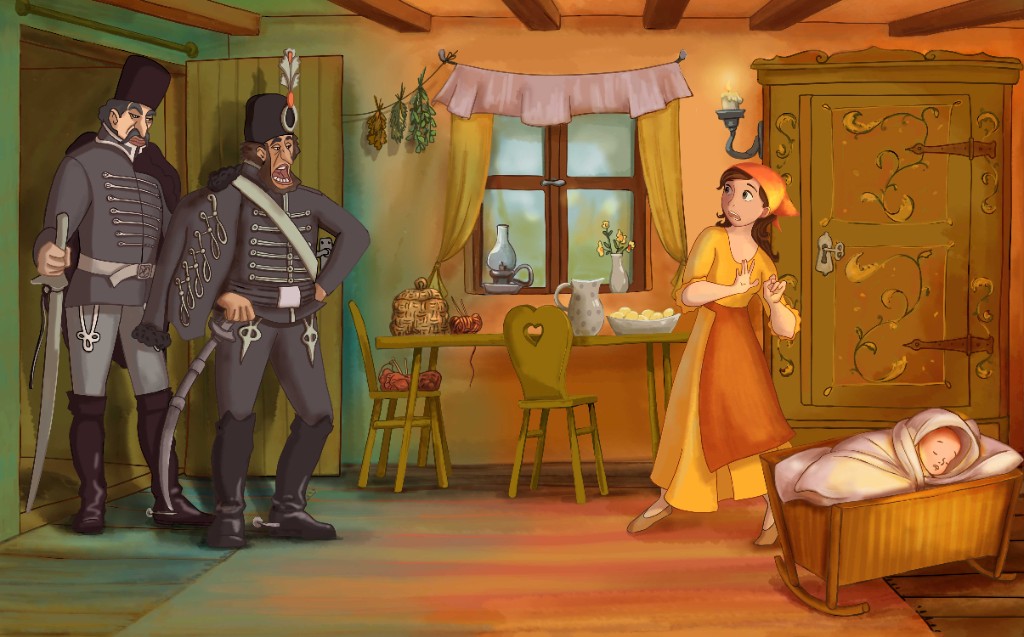
    At the hour of his birth, tradition tells of black hussars.

    Traditional

    Origin of the story

    Schönberg · Stülpner biography

    Historical context

    Independently of that scene, black hussars are attested in the region in contemporary sources. Pietzonka (p. 15) notes excesses by hussars in Großolbersdorf in 1761 and cites the Schönbrunn pastor’s diary on Belling’s black hussar corps.

    Assessment

    The concrete scene at the birth house, by contrast, comes from the Stülpner tradition. Whether these particular hussars stood in front of the Stülpner family house cannot be independently proven.

    Literature

    Johannes Pietzonka
    Carl Stülpner – Legende und Wirklichkeit
    p. 15

  • The scene in the book

    Volume 01 draws the traditional hussar episode into narrative form.

    Artistic condensation

    Basis

    Tradition of the hussar episode.

    Historical frame

    Military presence in the region is historically attested.

    Treatment in the book

    Dialogue, concrete sequences and individual scenic details are narrative shaping.

Family ·

Explore further

Go deeper into Carl's world.

History, knowledge and materials — for your perspective.

Before Carl

Before Carl was born.

A history that parents and children can discover together.

  1. c. 12,000–8,000 BC

    When the ice disappeared

    After the last Ice Age, it grows warmer. Forests spread, and deer, wild boar, wolves, lynx and brown bears return.

    For people, nature back then is not a place for a day out: It is larder, toolbox and home all at once. Children learn early from the adults what can be eaten, where to find water and which animals are best not approached too closely.

  2. c. 5,500–2,000 BC

    People stay

    More and more families settle down. They grow crops and keep animals such as sheep, goats, pigs and cattle.

    This changes family life: an animal is not simply cute. It can help decide how well a family gets through the winter.

  3. c. 800–1100

    The great forest

    Large parts of the Ore Mountains are still covered by vast forests. Deer, wild boar, wolves, lynx and brown bears share this habitat.

    The forest gives people food, wood and shelter – but also demands knowledge and respect. People do not yet rule the Ore Mountains. Nature does.

  4. c. 1150–1250

    Families move to the Ore Mountains

    More and more families move into the thinly populated parts of the Ore Mountains. Forest is cleared, houses are built, fields and paths appear.

    What is at first just a place to live becomes, over generations, home and homeland. The roots of Ore Mountain families begin to grow deeper.

  5. from the 12th/13th century

    The mountain changes everything

    The rock of the Ore Mountains holds ore – rock from which metals such as silver can be extracted. Mining brings people, work and new ideas to the region.

    Water has to be got out of the pits, rock has to be moved and new problems keep needing to be solved. The Ore Mountains become inventive.

  6. c. 1400–1600

    Now the Ore Mountain folk know their stuff!

    Blacksmiths, carpenters, miners, millers and many others have special skills. Knowledge is passed on, improved and handed down to the next generation.

    What is missing gets built. What breaks gets repaired. “We don't have that” more and more often becomes: “Then we'll just make it.”

  7. c. 1500–1700

    When it grows dark outside

    Life in the Ore Mountains is not just work. On long winter evenings, families and neighbours sit together, tell stories, sing and make music.

    People love their forests and mountains – and this homeland increasingly finds its way into stories and songs. Community makes even a cold Ore Mountain winter warmer.

  8. c. 1600–1750

    Wood becomes more than wood

    The people of the Ore Mountains have known wood as a material for generations. Now more and more turned, carved and painted objects are made from it.

    Later, children also help with suitable tasks and learn the adults' skills as they do so. Here grow the roots of a tradition of woodcraft and toymaking that will one day make the Ore Mountains known around the world.

  9. 16th–18th century

    Christmas gains more and more light

    Christmas does not yet look the way it does today. Nicholas, the Christkind, Knecht Ruprecht, presents, lights and other customs each have different histories and develop over a long time.

    In the dark Ore Mountain winter, light, music, family and celebrating together take on special meaning. Many generations help to build the Christmas for which the Ore Mountains later become famous.

  10. c. 1700–1760

    A child just before Carl

    Children work and learn, play, hear stories, sing and experience festivals. School and medical help exist, but both look completely different from today and depend greatly on where and in which family a child lives.

    Despite all the difficulties, this world is full of joy, mischief, love, music and dreams. Children back then were, above all, one thing: children.

  11. 1762

    Then Carl is born

    In 1762, Carl Stülpner is born in Scharfenstein.

    Behind him lie centuries of Ore Mountain history: forest and mining, craft and inventiveness, music and stories, family and solidarity.

    Carl is born into a homeland whose people have learned to roll up their sleeves, to persevere – and to make themselves comfortable all the same.

Materials

To take with you.

  • Family time travel PDF

    Would you be ready for Carl’s world?

    A shared journey through time: how would your family manage in the Ore Mountains just before Carl was born?

    Download PDF 60 KB
  • Family quiz PDF

    Who knows more – big or small?

    Children versus adults: 15 questions on animals, mining, toys, Christmas and family life before Carl.

    Download PDF 60 KB
  • Family sheet PDF

    Ask your family

    A trail through your own family: skills, stories, songs, customs, Christmas and home.

    Download PDF 56 KB
  • Family outing PDF

    On Carl’s trail

    A shared companion for Scharfenstein and the world of Volume 01 – for looking, talking and discovering.

    Download PDF 58 KB

Volume exit

Bridge to the next volume

Prices are rising.

Grain and stores grow scarce. The dearth moves through Saxony and the Ore Mountains.

Hardship deepens.

Scarcity and hunger reach the region clearly. Carl is about nine years old.

Volume threshold

02

Volume 02

Winter der Teuerung – Carl und der Schweinetrog-Pirat

Story period · 1770–1772

Submitted for

Swiss Children's and Youth Book Prize German Children's and Youth Book Prize

After winter, people in the Ore Mountains still lack almost everything. Carl meets that hardship and begins to help.

In the book

Context · 1770–1772

Why does this volume matter?

Carl is still a child when the Ore Mountains are struck by a severe famine and period of soaring prices.

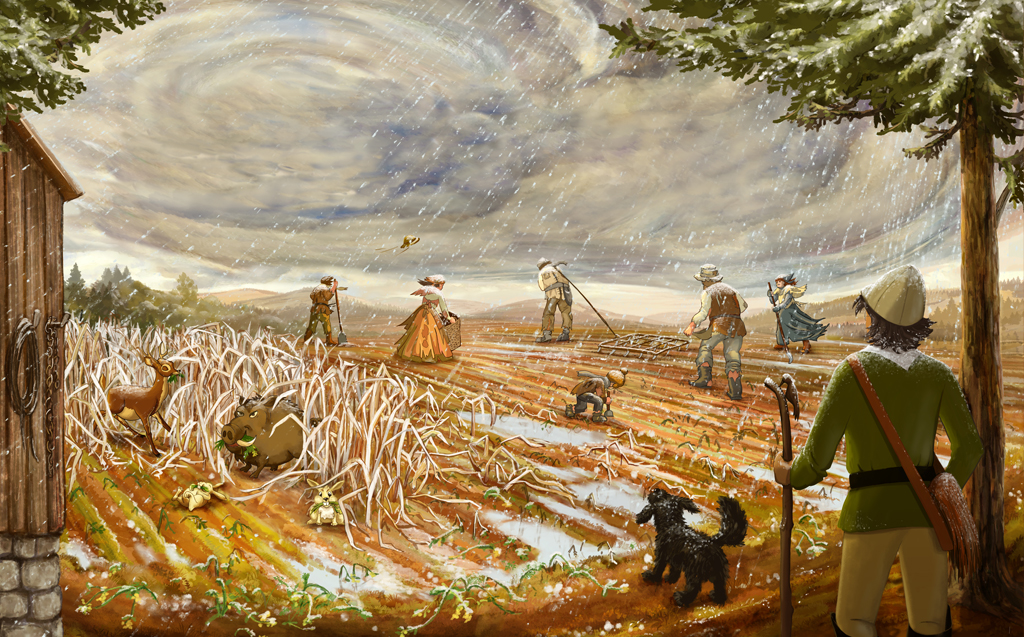
In 1770 a series of unusual weather events and poor harvests begins. In 1771 the harvest is destroyed again. Grain and bread prices rise dramatically. At the start of 1772, the ban on Bohemian grain exports makes matters even worse. Rising prices turn into hunger.

People sell their belongings, search the fields for anything edible and boil grass into mash. Disease spreads among the weakened population. Many die. Others leave their homes and take to the country roads.

Scharfenstein and Carl's family are not spared either.

Volume 02 therefore does not simply show a harsh winter or a poor harvest. It shows a time in which Carl experiences how quickly poverty can turn into hunger – and how important it is not simply to leave a person in need lying there.

These experiences belong to the formative years of his childhood and help us understand why justice, helping others and an eye for other people's hardship could play such a large part in his later life.

Discover knowledge

Burning questions

Evidence

How do we actually know this?

Documented, traditional or artistically condensed: here the state of the sources for Volume 02 becomes visible – without invented primary sources.

Historically documented Traditional Artistic condensation

Sources & citations

  • The weather

    Unusual weather events accumulate in 1770 and 1771.

    Historically documented

    Historical context

    Pietzonka names specific weather events: in 1770, thunderstorms in January, flooding of the Zschopau, snow from 18 to 22 March and a wet summer. In 1771, a mild winter, ploughing as early as February, snow in May and then rain right into August.

    Assessment

    In Pietzonka, this sequence of weather is directly linked to the poor harvests and the onset of rising prices.

    Literature

    Johannes Pietzonka
    Carl Stülpner – Legende und Wirklichkeit
    p. 19-20

  • Prices and hunger

    Grain and bread became extremely expensive within a short time.

    Historically documented

    Evidence

    Pietzonka gives concrete prices for grain, wheat, barley, oats and bread between January 1770 and June 1772. Example, grain: January 1770 – 1 thaler 12 groschen per scheffel; July 1771 – 10 thalers; June 1772 – 13 thalers 15 groschen.

    Historical context

    For 1770, Pietzonka gives an average daily wage of 4 groschen.

    Assessment

    This makes the scale of the price rises directly understandable. Staple foods became increasingly unaffordable for poor families.

    Literature

    Johannes Pietzonka
    Carl Stülpner – Legende und Wirklichkeit
    p. 19-20

  • The great migration

    During the famine, people left their homes and their families.

    Historically documented

    Historical context

    Pietzonka describes children begging for bread, people selling their belongings, and starving people eating grass, tree bark and roots. He then reports on the “great migration”: old people leave their children, children leave their parents. Hundreds take to the country roads.

    Assessment

    The wandering, weakened people in the children's book therefore stand within a historically documented setting. The specific characters and encounters of the children's book, however, remain artistic shaping.

    Literature

    Johannes Pietzonka
    Carl Stülpner – Legende und Wirklichkeit
    p. 20-21

  • Scharfenstein

    The high mortality is documented for Carl's immediate home.

    Historically documented

    Evidence

    Pietzonka reports from the register of deaths for Großolbersdorf. By 18 July 1771, 75 deaths of that year had already been buried. After that the register breaks off. For 1772, Pietzonka gives 154 deaths. For 1774: 21 deaths.

    Historical context

    For 18 July 1771, Pietzonka cites the note that no more bearers can be found and that the corpses are being taken away by the gravedigger in a wheelbarrow.

    Assessment

    The famine is thus tangible not only in general terms for Saxony or the Ore Mountains, but directly for Carl's own surroundings.

    Literature

    Johannes Pietzonka
    Carl Stülpner – Legende und Wirklichkeit
    p. 21-22

  • Carl's father

    Johann Christoph Stülpner may have fallen victim to the famine.

    Traditional

    Assessment

    This is a historically reasoned conclusion by Pietzonka, but not clear proof of the specific cause of death.

    Basis

    Pietzonka writes that one can say “in all probability” that Carl's father, Johann Christoph, became a victim of the famine.

    Literature

    Johannes Pietzonka
    Carl Stülpner – Legende und Wirklichkeit
    p. 22

  • The scenes in the book

    Volume 02 condenses the historical famine into Carl's story.

    Artistic condensation

    Basis

    Historically documented are the weather, crop failures, rising prices, hunger, disease, high mortality and the migration of the population.

    Historical frame

    Pietzonka's account describes precisely the world in which the young Carl lived during these years.

    Treatment in the book

    The specific encounters, dialogues, Strups's role and individual sequences of events in the children's book are artistic shaping. The historical conditions are not invented as a result – the story makes them tangible for children.

Family ·

Explore further

Go deeper into Carl's world.

History, knowledge and materials — for your perspective.

Famine years

What happens to a family when everything suddenly runs short?

The famine years 1770–1772 are a good moment to think together about something that often feels obvious today: Where does our food actually come from? And what happens when a family can no longer afford basic foods?

  1. 1770–1772

    When everything suddenly runs short

    Today food often seems self-evident: it is in the shop, in the fridge, on the table.

    The famine years in the Ore Mountains invite a shared question: Where does our food actually come from? And what is left when basic foods suddenly become unaffordable?

  2. 1770–1772

    Three bad years

    Historically documented

    The crisis did not begin on a single day. It grew as a chain:

    weather → poor harvest → less grain → higher prices → hunger → illness → migration.

    Several bad years in a row turned a hard summer into existential need.

  3. 1770–1772

    What did “expensive” mean?

    Historically documented

    Pietzonka gives concrete prices: one scheffel of grain cost 1 thaler 12 groschen in January 1770. By July 1771 it was already 10 thaler. In June 1772 it reached 13 thaler 15 groschen. A 7-pound loaf rose to 10 groschen and more. He gives an average daily wage of 4 groschen.

    “Expensive” meant: money often no longer covered basic food.

  4. 1770–1772

    Children had to share the burden

    Historically documented

    Children were part of work and family life. When a family fell into need, it did not hit adults alone.

    Children helped, worked and experienced hunger and illness directly. A childhood of playrooms and free time was not a given for many children of that era.

  5. 1772

    Stay or leave?

    Historically documented

    During the famine years many people left their homeland. Some sought work and food elsewhere. Families could be torn apart.

    Ask yourselves: Why does a family leave a place where it may have lived for generations?

  6. In the book

    Helping when you have little yourself

    Artistic condensation

    In Volume 02 Carl meets people in need and helps. The concrete encounters, dialogues and sequences are narrative design.

    The historical hardship around them is documented. The individual book figures and conversations are crafted.

  7. At the end

    What Volume 02 shows

    Volume 02 does not only show hunger.

    It shows how quickly a whole family’s life can change when something that seemed self-evident is missing: enough to eat.

    And it opens the question of how people treat one another when almost everyone is struggling.

Materials

To take with you.

  • Family time travel PDF

    Could Your Family Get Through a Winter of Rising Prices?

    A shared journey for children and adults: what does a family really need when grain becomes scarce, bread keeps getting more expensive and difficult choices have to be made?

    Download PDF 50 KB
  • Family quiz PDF

    Who Knows More – Grown-ups or Children?

    Ten questions to explore together about Volume 02, the hunger years, historical facts and the difference between documented, probable and artistically shaped history.

    Download PDF 40 KB
  • Family sheet PDF

    What Does a Family Really Need?

    Conversation prompts about hunger, help, fairness, home and difficult choices – for thinking and talking together after the story.

    Download PDF 42 KB
  • Family outing PDF

    Following Carl’s Footsteps

    Explore Scharfenstein, the Zschopau, forest and landscape together – with observation questions connecting Volume 02 to the real surroundings.

    Download PDF 42 KB

Volume exit

Bridge to the next volume

The years of famine leave deep scars.

The worst of the hardship begins to ease. But many families in the Ore Mountains have lost relatives, property and their economic security.

Carl loses his father.

Pietzonka considers it highly likely that Johann Christoph Stülpner died during the famine.

A new chapter begins for Carl.

His path leads to Ehrenfriedersdorf.

Volume threshold

03

The journey continues

Volume 03 · In progress

Der Förster und der Junge, der alles sehen wollte

Early summer 1773 · Ehrenfriedersdorf · Greifensteine

Carl is about eleven years old. His path leads him to forester Müller – and into a world where there is ever more for him to discover.

Coming soon

Cart

Your cart is empty.